
Dental X-Rays for Kids: Safety, Necessity, and What San Antonio Parents Need to Know
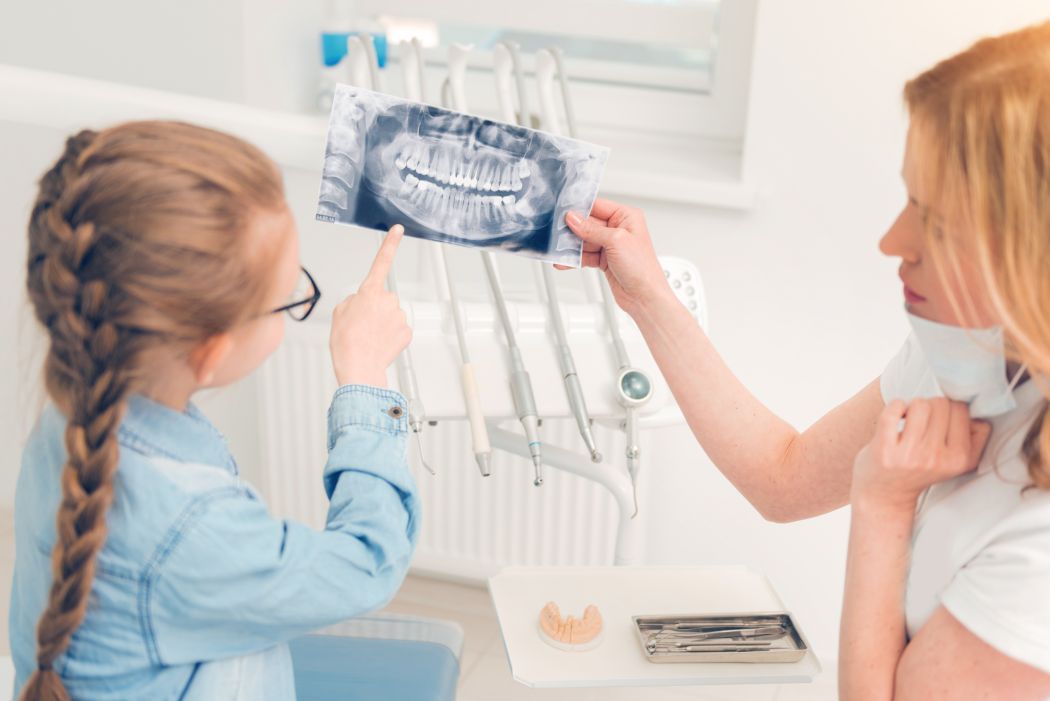


When our pediatric dentist recommends X-rays for your child, you might feel a flutter of concern. Questions about radiation exposure, necessity, and safety are completely natural and reflect your protective instincts as a parent. Understanding why dental X-rays are essential for children's oral health, how modern technology minimizes risk, and when X-rays become necessary helps you make informed decisions about your child's dental care.
Why Children Need Dental X-Rays
Unlike adults, children's mouths are constantly changing. Teeth are erupting, baby teeth are falling out, permanent teeth are developing beneath the gums, and jaws are growing. These dynamic processes create unique diagnostic challenges that visual examinations alone cannot address.
Our pediatric dentists can see the crowns of erupted teeth during visual examinations, but we cannot see what's happening beneath the gum line or between teeth without X-ray technology. Decay often develops in areas invisible to the naked eye, particularly between back teeth where toothbrush bristles cannot reach. By the time cavities become visible during routine exams, they're often quite advanced and require more extensive treatment.
X-rays reveal developing permanent teeth beneath the gums, allowing us to monitor their size, position, and development. We can identify potential problems like extra teeth, missing teeth, or teeth developing in abnormal positions while there's still time to intervene with less invasive treatments. X-rays also show bone health, tooth roots, and the internal structure of teeth, providing crucial information for diagnosing infections, injuries, and developmental abnormalities.
For children, early detection through X-rays often means the difference between a simple filling and a more complex procedure like a crown or extraction. This preventive approach protects your child from unnecessary pain, saves time and money, and preserves their natural teeth whenever possible.
Types of Dental X-Rays Used in Pediatric Dentistry
Different X-ray types serve specific diagnostic purposes, and we select the most appropriate images based on your child's age, dental development, and individual needs.
Bitewing X-Rays: These show the upper and lower back teeth in a single view, capturing the crown portions of teeth and the height of the bone between them. Bitewing X-rays excel at detecting cavities between teeth, monitoring existing fillings, and checking for bone loss associated with gum disease. We typically take these annually or every other year depending on your child's cavity risk.
Periapical X-Rays: These images show the entire tooth from crown to root, including the surrounding bone. Periapical X-rays help diagnose problems with tooth roots, bone health, and infections at the root tip. We use these when your child experiences tooth pain, trauma, or swelling, or when we need to monitor specific teeth for developmental issues.
Panoramic X-Rays: This single image captures all teeth, both jaws, and surrounding structures in one comprehensive view. Panoramic X-rays provide invaluable information about developing permanent teeth, jaw growth, wisdom teeth development, and overall oral health. We typically recommend these every few years, or when evaluating your child for orthodontic treatment.
Occlusal X-Rays: These images show the floor or roof of the mouth and help us track tooth development and eruption patterns. We use occlusal X-rays primarily in younger children to monitor primary teeth and developing permanent teeth.
Are Dental X-Rays Safe for Children?
Safety concerns about radiation exposure are understandable, and we take these concerns seriously. The good news is that modern dental X-rays expose children to extraordinarily low levels of radiation, especially with the digital technology we use.
To put radiation exposure in perspective, a set of four bitewing X-rays exposes your child to approximately the same amount of background radiation they encounter naturally in a single day. A panoramic X-ray equals about two days of natural background radiation. For comparison, your child receives more radiation exposure during a cross-country airplane flight than from a full set of dental X-rays.
Digital X-ray technology, which we use exclusively, reduces radiation exposure by up to 80% compared to traditional film X-rays. The images are captured electronically and appear instantly on our computer screens, eliminating the need for chemical processing and allowing us to enhance images for better diagnostic accuracy without retaking films.
We further minimize exposure through protective measures. Lead aprons with thyroid collars shield your child's body from scatter radiation. Fast film speeds and precise beam collimation ensure we use the absolute minimum radiation necessary to create diagnostic-quality images. Our equipment undergoes regular inspection and calibration to maintain optimal performance and safety standards.
The American Academy of Pediatric Dentistry, American Dental Association, and Food and Drug Administration all affirm that diagnostic dental X-rays, when performed appropriately, are safe for children. The minimal risk from radiation exposure is vastly outweighed by the benefits of early disease detection and prevention.
How Often Do Children Need Dental X-Rays?
X-ray frequency depends on several factors unique to each child. We follow evidence-based guidelines that balance diagnostic needs with radiation minimization principles.
For children at low risk for cavities with healthy teeth and gums, we typically recommend bitewing X-rays every 12 to 24 months. These routine images help us catch small problems before they become bigger issues. Panoramic X-rays may be taken every three to five years to monitor development and growth.
Children at higher risk for cavities may need more frequent X-rays, potentially every six to 12 months. Higher cavity risk includes children with previous decay history, poor oral hygiene, frequent snacking on sugary foods, or certain medical conditions affecting saliva production. More frequent monitoring allows us to detect and treat decay at its earliest stages when treatment is simplest.
We also take X-rays when specific situations warrant immediate imaging. Dental trauma from falls, sports injuries, or accidents requires X-rays to assess damage to teeth, roots, and surrounding bone. Tooth pain of unknown origin needs X-ray diagnosis to identify the source and determine appropriate treatment. Before certain dental procedures like extractions or orthodontic treatment, X-rays provide essential information for treatment planning.
What to Expect During Your Child's Dental X-Ray
Understanding the process helps children feel more comfortable and cooperative during X-ray appointments. The entire process typically takes just a few minutes and involves no discomfort.
Our team explains each step in age-appropriate language, showing children the equipment and letting them see how the X-ray sensor or film works. We position a small sensor or film holder comfortably in your child's mouth, secured with a gentle bite block. For bitewing X-rays, we ask your child to bite down gently on the holder. For other X-ray types, we may position the sensor against specific teeth or areas of the mouth.
The X-ray machine is positioned next to your child's cheek, and we step out of the room or behind a protective barrier while taking the image. The actual X-ray exposure lasts less than a second. For a complete set of bitewing X-rays, we repeat this process a few times to capture different areas of the mouth.
Digital X-rays appear on our computer screen within seconds, allowing us to review them with you immediately. We can zoom in on specific areas, adjust contrast and brightness, and point out any areas of concern or interest.
Preparing Your Child for Dental X-Rays
Most children tolerate dental X-rays easily, especially when parents approach the experience positively. A few preparation strategies help ensure smooth appointments.
Use simple, honest explanations appropriate for your child's age. Younger children might understand that the X-ray camera takes special pictures of their teeth to make sure they're growing strong and healthy. Older children can understand more detail about how X-rays help the dentist see hidden problems.
Avoid words that might create unnecessary anxiety like "hurt," "scary," or "radiation." Instead, focus on how quick and easy X-rays are. Let your child know they'll wear a special apron and need to stay very still for just a few seconds, like a statue game.
If your child has sensory sensitivities or strong gag reflexes, let us know in advance. We have strategies to help, including letting children practice with the sensor before taking actual X-rays, using smaller sensors for young children, and working at your child's pace with breaks as needed.
When Parents Can Decline X-Rays
While we recommend X-rays based on clinical necessity and evidence-based guidelines, parents ultimately make decisions about their children's dental care. We respect your role as the decision-maker and provide thorough explanations to support informed choices.
However, declining recommended X-rays can have consequences. Without X-rays, we cannot detect cavities between teeth until they're large enough to cause symptoms like pain or visible holes. By that point, treatment becomes more extensive and expensive. We cannot monitor developing permanent teeth or identify developmental problems early when intervention is most successful.
If cost concerns drive hesitation about X-rays, please discuss this with our team. Many insurance plans cover routine dental X-rays, and we work with families to find affordable solutions for necessary diagnostic imaging.
Special Considerations for Different Ages
X-ray needs evolve as children grow, and we tailor our approach to each developmental stage.
Infants and Toddlers: We typically avoid X-rays unless specific problems like trauma or suspected decay warrant imaging. Visual examinations usually provide adequate information for very young children with limited teeth.
Preschool Children: As baby teeth fill in and back teeth touch, X-rays become valuable for detecting cavities between teeth. We usually begin routine bitewing X-rays around age four or five when back teeth are in contact.
School-Age Children: This period of mixed dentition with both baby and permanent teeth present requires regular monitoring. We use X-rays to watch permanent teeth developing, ensure baby teeth are falling out on schedule, and detect cavities early.
Preteens and Teens: Panoramic X-rays become especially useful during these years to monitor wisdom teeth development and plan orthodontic treatment. Regular bitewings continue detecting cavities as children gain independence in their oral hygiene routines with varying success.
The Bottom Line: Benefits Outweigh Minimal Risks
Dental X-rays represent one of the most valuable diagnostic tools in pediatric dentistry. The extraordinarily low radiation exposure, made even lower through modern digital technology and protective measures, presents minimal risk. The benefits of early disease detection, prevention of extensive dental problems, and monitoring of normal growth and development far outweigh these minimal risks.
Our commitment to your child's health means we only recommend X-rays when clinically necessary. We never take unnecessary images, and we space routine X-rays as far apart as safely possible while still maintaining good diagnostic monitoring.
Trust Your Child's Oral Health to Our Expert Team
At Stone Oak Children's Dentistry & Orthodontics, we use state-of-the-art digital X-ray technology combined with comprehensive protective measures to ensure the safest possible diagnostic imaging for your child. Dr. Aashna Handa, Dr. Joanna Ayala, and our caring team specialize in pediatric dentistry and understand both the diagnostic needs of growing children and the concerns parents naturally have about their children's health.
Located in the heart of Stone Oak on Stone Oak Parkway, we serve families throughout Stone Oak, Bulverde, Hollywood Park, Shavano Park, and the greater San Antonio area. Our kid-friendly office creates positive dental experiences that help children feel comfortable and safe during every aspect of their care, including X-rays.
Whether your child is due for routine X-rays or needs diagnostic imaging to address a specific concern, we're here to answer your questions, explain our recommendations, and provide the highest quality care with your child's safety as our top priority.
Contact our office at (830) 772-4200 to schedule your child's next dental appointment. We look forward to partnering with your family to maintain your child's healthy, beautiful smile.


